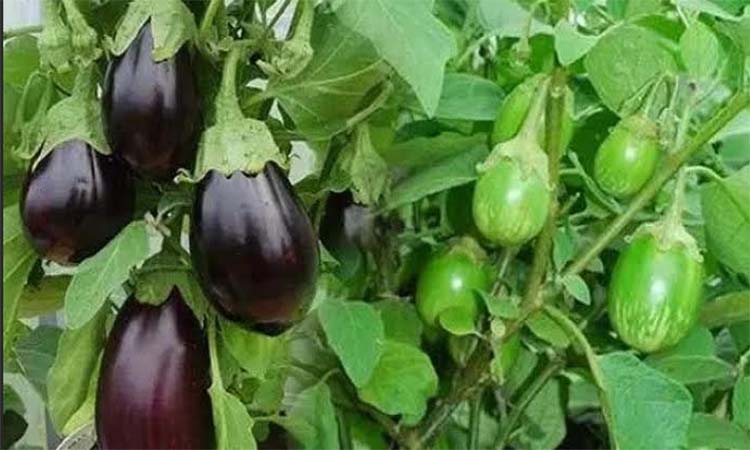
DINAJPUR, BANGLADESH, 4th July 2026 – In the verdant agricultural heartland of Khansama upazila, Dinajpur, farmers are currently navigating a season of abundant summer brinjal harvests, a testament to modern cultivation methods and consistent support from agricultural authorities. While lush green fields promise remarkable yields, a recent downturn in market prices has introduced a nuanced challenge to the initial optimism of growers.
The season began with considerable promise, as farmers initially secured attractive prices for their produce. The Department of Agricultural Extension (DAE) has played a pivotal role in this early success, providing essential technical guidance and encouraging the adoption of improved brinjal varieties. Such interventions have steadily fostered the popularity of early-season summer brinjal cultivation over the past two years, leading to a significant expansion of farming in the region.
Khansama Upazila agriculture officer Rashed Hasan noted that the early weeks of the season saw the crop fetching excellent prices, bringing smiles to the faces of growers. “Farmers have not faced any marketing difficulties,” Hasan explained. “Wholesale traders are coming directly to the fields to purchase the product, streamlining the selling process for our growers.” This direct farm-gate procurement minimises logistical hurdles and ensures quicker transactions for the agricultural community.
However, as harvesting intensified and larger volumes of brinjal began to flood wholesale markets, the inevitable consequence of increased supply became apparent: prices started to decline. Farmers in villages like Bhabki, who have diligently applied DAE-recommended practices, acknowledge this market fluctuation. Syed Ali, a local grower, shared his experience, stating that while improved varieties have generally yielded encouraging returns, the escalating costs of production—including fuel, chemical fertilisers, pesticides, and labour—have substantially increased cultivation expenses this year. This rise in input costs, coupled with reduced wholesale prices compared to previous seasons, presents a tighter profit margin.
Despite the recent price drop, a spirit of resilience permeates the farming community. “Even though prices have declined, we are not discouraged,” Ali affirmed. “The market fluctuates every year, and because production is so good, we still expect to make a profit, although it may be smaller than last year’s.” This stoicism underscores the inherent uncertainties of agricultural livelihoods.
Data from the field reflects this shifting market landscape. Initially, brinjal sold for between Taka 1,500 and Taka 1,700 per maund. Over recent days, however, prices have fallen to Taka 800 to Taka 900 per maund as market supplies surged. For sharecroppers like Mominur Rahman of Badalgari village, who cultivated early-season summer brinjal on two bighas of leased land at an annual rent of Taka 32,000, these dynamics are particularly impactful. “Production costs have nearly doubled because of higher fuel prices, fertilisers, pesticides, and wages,” he stated, yet he remains optimistic, believing that the bumper harvest will still ensure profitability.
In Subarnakhuli village under Angarpara Union, farmer Rezaul Islam recounted his decision to switch to summer brinjal cultivation after receiving advice from the upazila agriculture office. “This year I cultivated one bigha of land,” he explained. “Favourable weather has produced an excellent harvest. I expect to continue selling brinjal for another month and a half. The recent decline in prices is worrying, but I believe the higher yield will compensate for it.”
Abu Taleb, another farmer from Subarnakhuli, echoed a similar sentiment of cautious optimism. “Good weather has resulted in bumper production,” he observed. “Prices remained attractive for nearly a month at the beginning of the season but have now fallen by almost half.” Taleb detailed his production costs, which typically range from Taka 20,000 to Taka 25,000 per bigha. He has already generated Taka 48,000 from sales and anticipates selling an additional Taka 20,000 to Taka 25,000 before the season concludes. “If the crop remains free from diseases and market prices stay reasonable, sales of Taka 80,000 to Taka 100,000 per bigha are achievable,” he projected. “Even after production costs, farmers can normally earn Taka 60,000 to Taka 70,000 per bigha. Costs have increased sharply this year, so profits may be lower, but we do not expect to incur losses.”
Khansama Upazila Agriculture Officer Yasmin Akter highlighted the growing adoption of summer brinjal cultivation among local farmers, attributing this trend to sustained extension support from the agriculture department. “The soil in this region is highly suitable for brinjal cultivation,” she remarked. “This season, nearly 250 hectares of land have been brought under cultivation. Most farmers received good prices at the beginning of the season. Prices have softened because supplies have increased, but growers are still expected to remain profitable.” The agriculture department, she confirmed, is closely monitoring farmers’ production and marketing activities, expressing confidence that the season will ultimately prove rewarding despite the recent fluctuations in price.